My article, “Frederick Douglass on the Deformation of American Conscience” was recently accepted in American Political Thought!
Abstract: This article argues that, for Frederick Douglass, conscience is the central terrain on which the struggle between white supremacy and racial justice is waged. While influential commentators emphasize Douglass’s efforts to awaken the dormant white conscience or restore Black dignity through acts of self-assertion, I argue that Douglass views the consciences of both white and Black Americans as profoundly deformed by legacies of racial domination. By tracing Douglass’s writings from the crisis of the Fugitive Slave Act through the post-Reconstruction entrenchment of Jim Crow, I reconstruct his progressively sober assessment of this disfigurement. Yet even as Douglass doubts the prospects for this transformation, he insists on continued resistance to racial injustice. Douglass’s call for continued agitation—contend, contend!—insists that the struggle for racial justice must persist. Conscience thus emerges in Douglass’s political thought as both a faculty deformed to sustain racial domination and a fragile yet necessary vehicle for democratic repair.
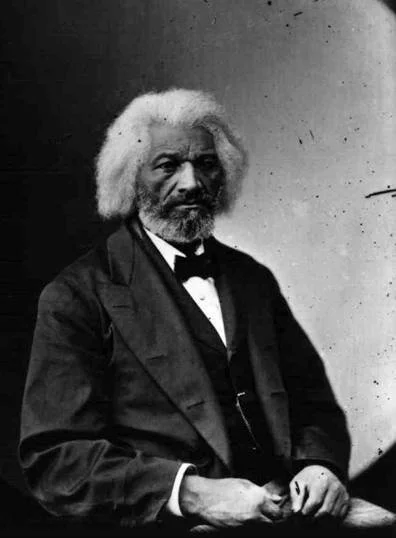
My editorial on what Frederick Douglass has to teach us on America's 250th birthday was recently featured in the Philadelphia Inquirer. Drawing on one of Douglass’s 1983 pieces, I argue that his call to “contend, contend” still speaks to the enduring project of American democracy today. Please see a copy here.



My work on Ida B. Wells is finally out in Perspectives on Politics!
Abstract: A courageous agitator, Ida B. Wells is known for her principled commitment to racial justice and reluctance to consider concessions in her anti-lynching advocacy. Yet this article argues that Wells negotiates her political principles, specifically her commitment to sacrificial death in political resistance, given the constraints she faces as a Black woman advocating for racial justice in Jim Crow America. Wells links Black leadership with sacrificial death, but she qualifies this view of resistance when confronted with threats against her own life and the Black community in Memphis, Tennessee. Wells is committed to racial justice and willing to make unimaginable sacrifices to try to awaken the conscience of white Americans to the injustice of lynching, but she also engages in political resistance that centers care for the Black community. By examining Wells’s theory of political resistance and Black leadership in her political writings alongside her reflections on her anti-lynching advocacy in her autobiographical writings, this article recovers Wells’s commitment to care and community in her political resistance and reflects on how Black actors negotiate competing principles in practice under oppressive conditions.
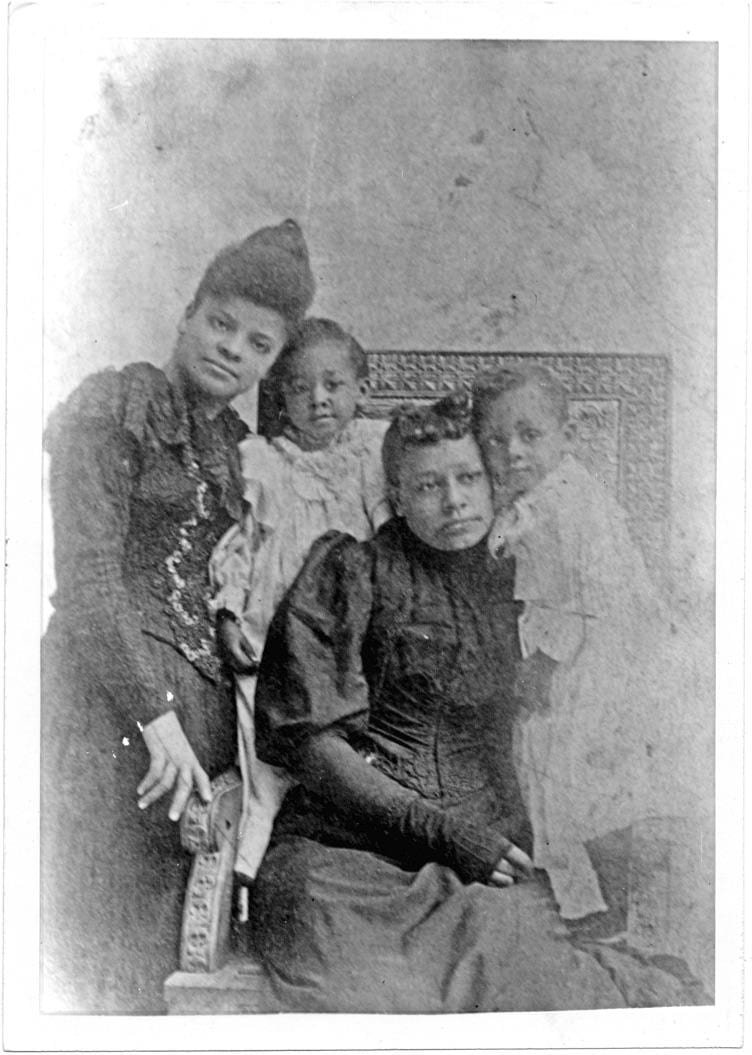
I recently published an essay on Ida B. Wells’s view of political resistance in TIME, bringing her theory and practice of political resistance into conversation with recent debates on the celebration of Black History Month.

This past year, I taught the “Introduction to Political Theory” lecture course at Washington University in St. Louis. We engaged with three core concepts in the discipline of political theory - justice, freedom, and democracy. Please see the syllabus here, as well as a visual representation of some of the authors that we are engaging with in this course.


Lecture on Frederick Douglass’s “What to the Slave is the Fourth of July?”, Washington University in St. Louis, April 2025.
Here’s a digital whiteboard of our review session from our justice unit on Sophocles’s Antigone, King’s “Letter from a Birmingham Jail,” and Rawls’s Theory of Justice.

Here’s a digital whiteboard of our review session from our freedom unit on Jean-Jacques Rousseau’s Second Discourse, Mary Wollstonecraft’s Vindication of the Rights of Woman, Karl Marx’s Communist Manifesto, and W.E.B. Du Bois’s Black Reconstruction in America.

Here’s a digital whiteboard of our review session from our democracy unit on Tocqueville’s Democracy in America, Douglass’s “What to the Slave is the Fourth of July?”, and Lorde’s “The Master’s Tools Will Never Dismantle the Master’s House,” “The Uses of Anger,” and “Poetry is not a Luxury.”

This past year, I completed a research fellowship at the Beinecke Rare Books & Manuscript Library at Yale University. It was incredible to engage with their materials on Frederick Douglass, W.E.B. Du Bois, and Ida B. Wells, and see many of my colleagues back at Yale.


My author-meets-critics book panel at APSA 2024 was incredible. Many thanks to the participants, Yuna Blajer de la Garza, Julie Cooper, Joshua Cherniss, and Gianna Englert, for their generous intellectual engagement. I am looking forward to publishing this collection of responses to the book with Susan Collins at Review of Politics as a symposium.

